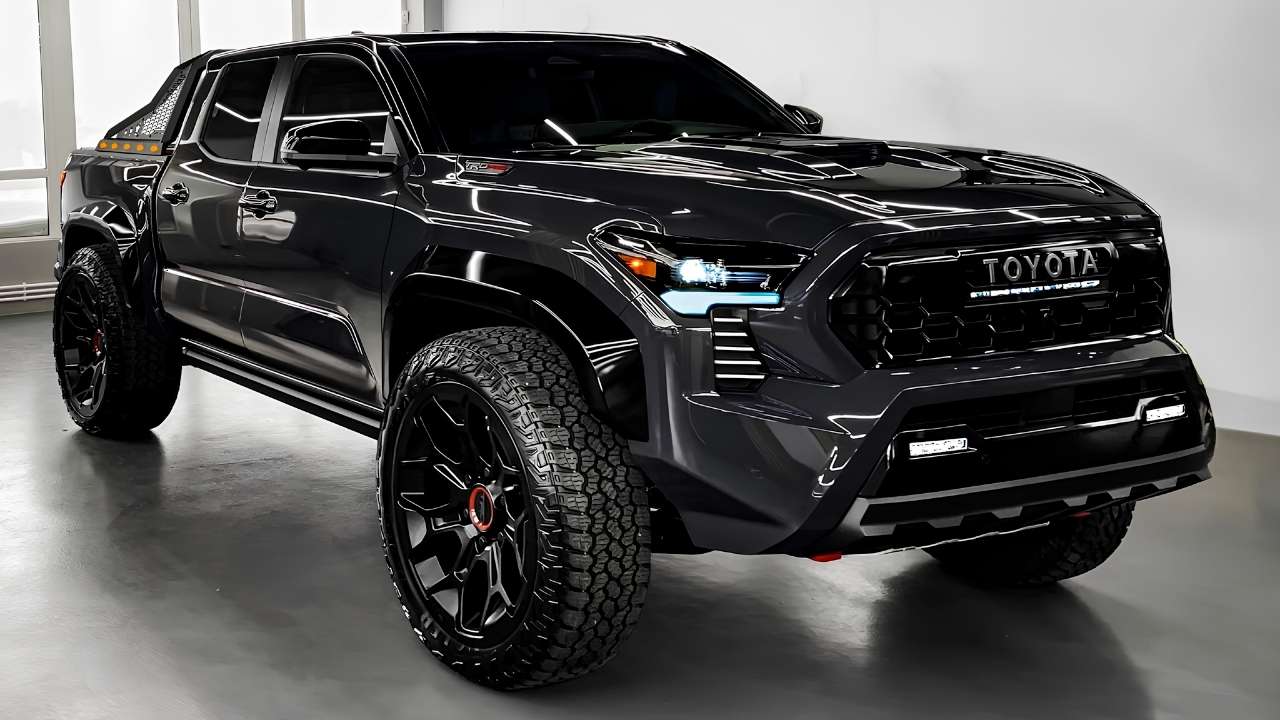
Toyota Tacoma 2026 Review: The Toyota Tacoma has spent decades building a reputation as a pickup that can handle difficult terrain without becoming difficult to live with. It has always appealed to drivers who want more than a basic work truck, especially those who spend weekends exploring trails, camping or traveling far beyond the city.

The 2026 Toyota Tacoma continues that tradition while offering the technology, comfort and design expected from a modern pickup.
The latest generation brought major changes to the Tacoma, including new powertrains, a redesigned cabin and more sophisticated off road equipment. Instead of abandoning the characteristics that made the Tacoma popular, Toyota has attempted to strengthen them while making the truck more comfortable for everyday driving.

That combination is what makes the Tacoma interesting. It can be a practical vehicle during the week and an adventure partner on the weekend.
A Tough Exterior With Modern Character
The Tacoma has never needed an extravagant design to look capable. Its shape communicates strength through its proportions, high stance and muscular bodywork.

For 2026, the Tacoma continues the styling introduced with the latest generation. The front end is broad and upright, while the grille and lighting elements give the truck a strong visual identity.
The design varies between trims, allowing Toyota to give each version a different personality.

More practical configurations have a straightforward appearance, while sportier versions add visual details intended to emphasize performance.
The off road focused models go even further. Larger tires, increased ground clearance, protective components and distinctive exterior details make it clear that these trucks are designed for more than paved roads.
At the premium end, the Tacoma can also look surprisingly sophisticated. Modern wheel designs, carefully finished exterior elements and LED lighting help give the pickup a more polished appearance without making it look fragile.
Turbocharged Power for Everyday Performance
The latest Tacoma generation moved away from its previous naturally aspirated V6 and introduced a turbocharged 2.4 liter four cylinder engine.
This engine is available in different states of tune depending on configuration. The standard version can produce up to 278 horsepower and 317 lb ft of torque, while higher output versions can reach 326 horsepower and 465 lb ft of torque when combined with Toyota’s i FORCE MAX hybrid system.
The change to turbocharging gives the Tacoma strong low end torque, which is useful for both normal driving and demanding situations.
When merging onto a highway, climbing a steep road or carrying a heavy load, torque matters just as much as the headline horsepower number.
The hybrid system is particularly interesting because electric assistance provides immediate torque. This can make the truck feel responsive when accelerating from low speeds.
For drivers who want traditional gasoline power, the non hybrid versions remain appealing. For those looking for stronger performance and additional efficiency, the hybrid option provides another direction.
Off Road Capability Remains the Heart of the Tacoma
The Tacoma’s biggest advantage has always been its ability to leave the pavement.
Toyota offers several configurations aimed at different types of off road drivers. Some focus on moderate trail use, while more specialized versions are designed for challenging terrain.
The TRD Off Road models provide hardware and tuning intended to improve performance on rough surfaces.
The TRD Pro takes the concept further with specialized suspension equipment, off road tires and additional features designed for demanding trails.
Then there is the Trailhunter, which focuses heavily on overlanding.
This variety is important because not every off road enthusiast wants the same thing. Some drivers want a truck that can handle a dirt road to a campsite. Others want to explore difficult trails for several days.
The Tacoma lineup provides different ways to approach that lifestyle.
Suspension Designed for Uneven Terrain
Off road performance depends heavily on suspension.
A pickup can have plenty of power, but if the suspension cannot maintain control over rocks, ruts and uneven surfaces, the experience becomes uncomfortable and unpredictable.
The Tacoma uses different suspension configurations depending on trim.
The more specialized models receive equipment designed to improve wheel movement and control when the terrain becomes difficult.
This is particularly important when one wheel climbs an obstacle while another drops into a hole. The suspension needs to provide enough movement to keep the truck stable and maintain traction.
The result is a pickup that feels more confident when the road becomes rough.
A Practical Truck Bed
The Tacoma is not only an off road vehicle. It is still a pickup, and that means the cargo bed has to be useful.
Different configurations provide different bed lengths, allowing buyers to choose between maneuverability and additional cargo space.
The bed can be used for tools, building materials, camping equipment, bicycles, coolers and countless other items that are difficult to carry in a conventional SUV.
Toyota also offers features intended to make the bed more convenient to use.
For outdoor enthusiasts, this flexibility can be extremely valuable. A weekend trip may require tents, cooking equipment, recovery gear and outdoor accessories.
Having an open cargo area makes it easier to bring all of that without filling the passenger cabin.
A More Modern Interior
The interior of the latest Tacoma represents a significant step forward.
Earlier generations were known for durability and simplicity, but the modern Tacoma adds a much stronger technology focus.
The dashboard incorporates a contemporary infotainment system and digital information displays, while the overall layout feels more sophisticated.
The seating position remains commanding, giving the driver a clear view over traffic and surrounding terrain.
Higher trims add additional comfort features and more premium materials.
The result is a cabin that feels suitable for everyday use rather than being designed exclusively around work.
That matters because many Tacoma owners use their trucks as primary vehicles.
They may spend the morning commuting, the afternoon running errands and the weekend driving through the mountains.
Technology That Works in the Real World
The Tacoma’s technology is designed around both normal driving and outdoor activities.
A modern infotainment display provides access to navigation, entertainment and smartphone connectivity.
Depending on configuration, wireless smartphone integration can make it easier to access familiar applications without constantly connecting a phone by cable.
The vehicle can also provide information related to off road driving, helping drivers understand what the truck is doing when the surface becomes difficult.
Toyota’s driver assistance technology adds another layer of convenience on paved roads.
Features designed to assist with braking, lane awareness and adaptive cruise control can reduce some of the workload during longer highway journeys.
The important thing is that these systems remain tools for the driver rather than replacements for attention and judgment.
Comfort for Long Trips
A pickup that spends time on trails still needs to be comfortable on the highway.
The Tacoma’s newer interior is better suited to long distance travel than many older generations.
Depending on trim, buyers can find heated seating, power adjustments, dual zone climate control and other convenience features.
The cabin also benefits from the more modern design and improved technology.
For a driver traveling several hours to reach a remote trail, comfort becomes important.
The Tacoma does not need to behave like a luxury sedan, but it should make the journey to the adventure enjoyable rather than exhausting.
Premium Style Without Losing the Truck Identity
Modern pickups have increasingly moved toward premium territory, and the Tacoma is part of that trend.
Higher trim levels combine rugged exterior details with more refined interiors.
Premium upholstery, larger displays, upgraded audio systems and distinctive trim elements can create a much more upscale environment.
The key is balance.
The Tacoma should still feel like a truck. The materials need to be durable enough for outdoor use, and the overall design should remain practical.
That combination of toughness and refinement is one of the most appealing aspects of the current generation.
The Tacoma as an Everyday Vehicle
One reason the Tacoma remains popular is that it does not require an extreme lifestyle.
You do not need to spend every weekend climbing mountains to appreciate it.
The pickup can be useful for ordinary tasks such as carrying furniture, visiting a home improvement store, transporting sports equipment or taking a road trip.
Its smaller footprint compared with full size pickups can also make it easier to maneuver in many urban environments.
At the same time, the truck retains the ability to become an adventure vehicle whenever the opportunity appears.
That flexibility is difficult to replicate with a traditional crossover.
Hybrid Power Changes the Formula
The available i FORCE MAX hybrid powertrain adds another dimension to the Tacoma.
Instead of treating hybrid technology purely as an efficiency solution, Toyota uses electric assistance to provide additional performance.
The system can produce up to 326 horsepower and 465 lb ft of torque in applicable configurations.
That additional torque can be particularly useful off road.
At low speeds, precise throttle response is important. Electric assistance can provide immediate power without requiring the engine to build up speed first.
For drivers who want stronger performance, the hybrid Tacoma is therefore an appealing alternative to the standard turbocharged configuration.
Is the 2026 Tacoma a Good Choice?
The answer depends on what you expect from a pickup.
If the main requirement is maximum towing capacity and enormous interior space, a full size truck may make more sense.
But if the goal is a pickup that combines manageable dimensions, off road capability, modern technology and everyday comfort, the Tacoma becomes much more interesting.
The range of trims also makes it easier to find the right personality.
A buyer can choose a relatively simple configuration for everyday use or move toward a specialized model designed around serious outdoor activities.
Final Thoughts
The Toyota Tacoma 2026 is a strong example of how a traditional pickup can evolve without losing its identity.
It remains rugged, capable and ready for difficult terrain, but the modern cabin and technology make it much easier to use every day.
The turbocharged engine provides useful performance, while the available hybrid system adds another level of power and torque.
Off road focused versions give serious enthusiasts plenty of reasons to take the Tacoma beyond the pavement, while higher trims provide additional comfort for drivers who spend most of their time on normal roads.
Perhaps the Tacoma’s biggest strength is its balance.
It does not need to be the largest pickup or the most luxurious vehicle in its class. Instead, it offers a combination of size, capability, technology and personality that works for a wide range of drivers.
For someone looking for a pickup that can handle a weekday commute and still be ready when the next adventure arrives, the 2026 Toyota Tacoma remains a compelling choice.