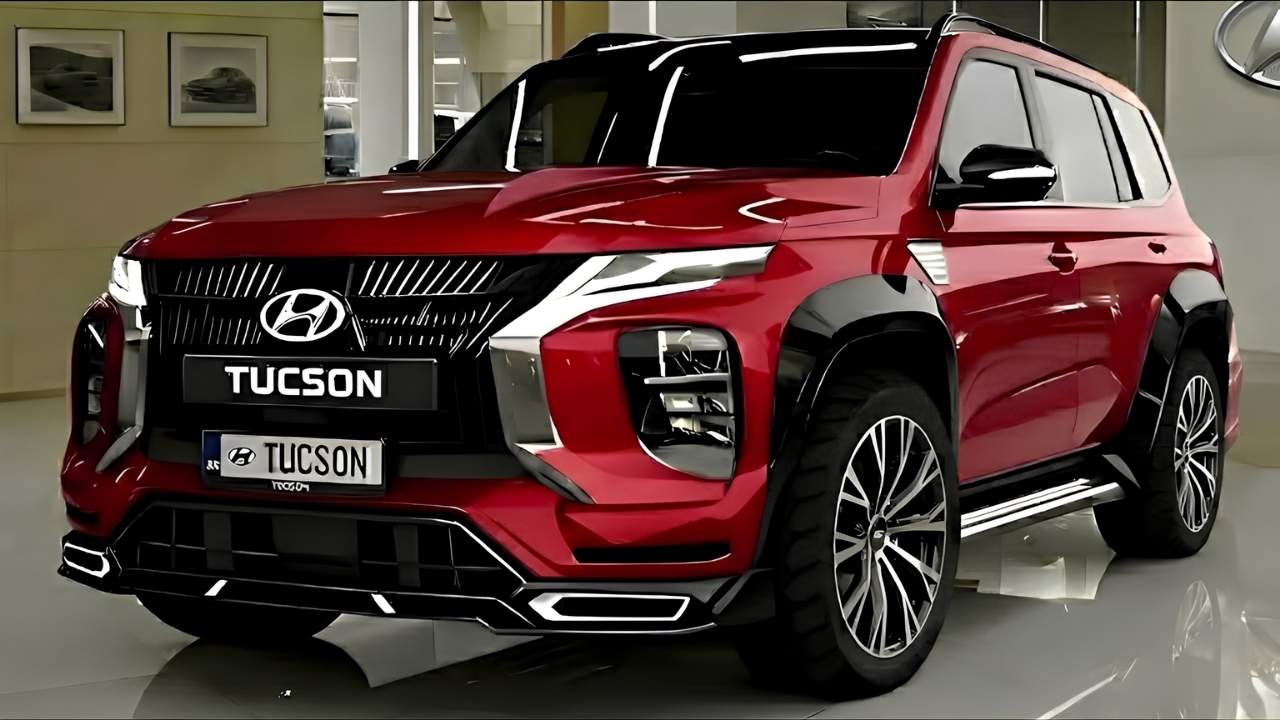
The Hyundai Tucson has evolved far beyond its earlier identity as a practical compact SUV. Modern versions have become stylish, technology focused and increasingly premium, giving buyers a serious alternative to established names in the segment.
For 2026, the Tucson continues that transformation with a bold exterior, a spacious cabin, advanced driver assistance systems and multiple powertrain options depending on the market. Rather than trying to win purely through horsepower, the Tucson’s strongest argument is the combination of design, comfort, technology and everyday practicality.
Calling it the most technological or luxurious SUV of the year would be subjective, and exact specifications vary by country and trim. Nevertheless, the Tucson remains one of Hyundai’s most important global SUVs and offers a remarkably sophisticated package for its class.
A More Confident Tucson
The latest Tucson design is considerably more distinctive than the conservative styling associated with older generations.
The front features Hyundai’s dramatic lighting signature integrated into the grille area.
Sharp character lines give the body a sculpted appearance.
The wide stance makes the SUV look larger than it actually is.
The rear continues the modern theme with carefully integrated lighting and a clean tailgate design.
It is an SUV that can stand out without relying on excessive decoration.
Futuristic Exterior Design
The Tucson’s exterior is arguably one of its strongest features.
Hyundai uses geometric shapes and carefully positioned lighting to create a futuristic appearance.
The grille and daytime running lights work together as one visual element.
The body sides feature strong surfaces that change appearance depending on the lighting.
Higher trims can add larger wheels and additional exterior detailing.
The overall result is considerably more adventurous than the average family crossover.
LED Lighting Technology
Lighting plays an important role in the Tucson’s identity.
The front lighting signature makes the SUV immediately recognizable at night.
LED technology provides bright and efficient illumination.
Higher specification versions can offer more sophisticated lighting functions.
At the rear, compact LED elements create a clean appearance.
The lighting design also contributes to the vehicle’s premium image.
Interior Transformation
Step inside the Tucson and the difference from older Hyundai SUVs becomes obvious.
The cabin is designed around a clean horizontal layout.
Digital displays provide important driving information.
A large infotainment screen handles navigation, entertainment and vehicle functions.
The center console is designed to reduce clutter.
Depending on trim, buyers can find premium upholstery, heated seats and additional comfort features.
The result is a cabin that feels significantly more expensive than some buyers might expect.
Premium Interior Experience
Hyundai has made a major effort to improve perceived interior quality.
Soft touch surfaces are used across important areas.
Higher trims can feature leather or premium synthetic upholstery.
Ambient lighting can create a more relaxing atmosphere at night.
Heated and ventilated seats can improve comfort in extreme weather.
The overall design focuses on creating a calm environment rather than filling every surface with buttons.
Spacious Family Cabin
The Tucson remains a practical family SUV.
The rear seats offer useful legroom.
The relatively upright roof provides good headroom.
Wide doors make access straightforward.
Storage compartments are positioned throughout the cabin.
The rear cargo area can accommodate luggage, groceries and everyday equipment without requiring owners to sacrifice passenger space.
Technology Focus
Technology is one of the biggest reasons to consider the Tucson.
The infotainment system provides access to navigation, media and vehicle settings.
Smartphone integration makes it easy to use familiar applications.
Wireless charging can keep compatible devices powered.
Digital displays can present information in a clear format.
Higher trims may add premium audio and additional connected services.
Hyundai has effectively turned the Tucson into a technology showcase within its class.
Digital Driver Experience
A modern SUV needs to provide information without overwhelming the driver.
The Tucson’s digital interface can display speed, navigation information and vehicle status.
Depending on specification, different display layouts can be selected.
The infotainment system can also provide access to vehicle settings.
Voice commands can reduce the need to interact physically with the touchscreen while driving.
Advanced Safety Technology
Safety is another major Tucson strength.
Depending on market and trim, Hyundai offers a wide range of driver assistance systems.
Automatic emergency braking can help detect potential frontal collisions.
Adaptive cruise control can maintain a selected distance from traffic.
Lane keeping and lane following assistance can help the vehicle remain properly positioned.
Blind spot monitoring can provide additional awareness during lane changes.
Rear cross traffic assistance can be useful when reversing from parking spaces.
The exact system availability depends on the version sold in each market.
Highway Assistance
Long distance driving is one area where modern Tucson technology can be especially useful.
Adaptive cruise control can reduce the workload during highway travel.
Lane assistance can provide additional steering support.
Forward collision warning can alert the driver to potential hazards.
Blind spot technology can improve awareness around the vehicle.
These systems do not replace the driver, but they can make long journeys less tiring when used responsibly.
Petrol, Hybrid and Plug In Hybrid Choices
One of the Tucson’s biggest advantages is powertrain variety.
Depending on the market, buyers can choose from gasoline and electrified configurations.
Hybrid technology combines an internal combustion engine with electric assistance.
The electric motor can provide additional torque during acceleration.
Regenerative braking can recover energy during deceleration.
A plug in hybrid can offer a larger battery and the ability to drive using electric power for shorter trips when sufficiently charged.
Availability varies by country.
Hybrid Performance
The hybrid Tucson can provide a smoother driving experience than a conventional gasoline model.
Electric torque is available quickly.
The gasoline engine takes over when sustained power is required.
The transition between the two can be relatively seamless.
For city drivers, hybrid technology can potentially reduce fuel consumption.
For highway users, the gasoline engine provides the sustained energy needed for longer journeys.
Is It Really the Most Powerful?
The Tucson is not designed to be the most powerful SUV in the entire market.
There are considerably faster performance SUVs available.
Its strength is balanced performance.
The hybrid system can provide strong response.
The available all wheel drive system can improve traction.
The suspension prioritizes comfort and stability.
This makes the Tucson better suited to everyday driving than chasing extreme acceleration numbers.
All Wheel Drive Capability
All wheel drive availability gives the Tucson additional versatility.
It can improve traction on wet roads.
It can help on gravel and light off road surfaces.
It can provide greater confidence in winter conditions where available.
However, the Tucson is still primarily a road focused crossover.
It should not be confused with a specialized off road SUV.
Ride Quality
Comfort is one of the Tucson’s strongest qualities.
The suspension is designed to absorb normal road imperfections.
The vehicle remains stable at highway speeds.
Steering is predictable and easy to manage.
Larger wheels can sometimes make the ride firmer, depending on specification.
For everyday family use, the overall balance is more important than outright cornering performance.
Highway Comfort
The Tucson can be a strong long distance vehicle.
The seats provide useful support.
The cabin is relatively spacious.
Modern driver assistance systems can reduce fatigue.
The infotainment system provides navigation and entertainment.
Hybrid versions can also offer smooth acceleration and quiet operation at lower speeds.
Urban Driving
The Tucson’s relatively compact footprint makes it practical for city use.
The elevated driving position improves forward visibility.
Parking sensors and cameras can simplify maneuvering.
A surround view system on higher specifications can make tight parking spaces easier to navigate.
Automatic transmission and hybrid power can also make stop and go traffic less stressful.
Fuel Economy
Fuel economy varies significantly between Tucson versions.
A conventional gasoline model will generally consume more fuel than an efficient hybrid under comparable conditions.
Hybrid systems can perform particularly well in urban environments because they can recover energy during braking.
Plug in hybrid versions can potentially use very little gasoline on short journeys when regularly charged.
Real world consumption depends on speed, weather, traffic, payload and driving style.
Cargo Space
The Tucson offers useful cargo capacity for a family SUV.
The rear seats can fold when additional space is required.
The wide rear opening makes loading easier.
The relatively square cargo area is practical for luggage and shopping.
Hybrid and plug in hybrid packaging can affect cargo dimensions slightly depending on the market and battery arrangement.
Family Practicality
The Tucson is well suited to families that need one vehicle for multiple responsibilities.
It can handle school runs during the week.
It can carry luggage on holidays.
It can transport sports equipment.
It can also handle occasional outdoor trips.
Rear passenger comfort and cargo flexibility make it more versatile than a smaller crossover.
Hyundai Tucson Versus Toyota RAV4
The Toyota RAV4 is one of the Tucson’s most important competitors.
The RAV4 has a strong reputation for hybrid efficiency and reliability.
The Tucson counters with distinctive styling, a technology rich interior and a strong equipment list.
The better option depends on local pricing, powertrain availability and individual priorities.
Hyundai Tucson Versus Honda CR V
The Honda CR V emphasizes spaciousness, comfort and efficient powertrains.
The Tucson competes with more dramatic styling and a technology focused cabin.
Both are practical family SUVs.
The Tucson may appeal more to buyers who prioritize design and features, while the CR V can attract those seeking a straightforward family vehicle with strong efficiency and practicality.
Price Truth
There is no single global 2026 Hyundai Tucson price.
Pricing differs according to country, engine, trim, drivetrain and equipment.
Hybrid and plug in hybrid versions generally occupy different price points from conventional gasoline models.
Taxes, registration fees, destination charges and dealer pricing can also influence the final amount.
For this reason, online claims about one universal Tucson price should be treated cautiously.
The most useful figure is the official price of the exact trim available in your market.
Ownership Costs
The Tucson is designed to be a practical daily vehicle.
Routine maintenance remains important regardless of powertrain.
Gasoline versions require conventional engine servicing.
Hybrid models still use an internal combustion engine and therefore require appropriate maintenance.
Tires, brakes, suspension components and fluids are normal ownership considerations.
Hybrid regenerative braking can potentially reduce friction brake wear under certain driving conditions.
Is the Tucson Truly Luxurious?
The Tucson can feel surprisingly premium in higher trims, but it is still positioned as a mainstream SUV.
It should not be compared directly with a Mercedes Benz, BMW or Range Rover in terms of materials, craftsmanship or prestige.
Its advantage is offering many premium style features without entering the price territory of luxury brands.
That is a more realistic way to understand its appeal.
The Technology Advantage
The Tucson’s technology is arguably more important than its raw performance.
The combination of digital displays, connected services, smartphone integration, driver assistance and hybrid power creates a modern driving experience.
It feels designed for buyers who expect their vehicle to function as an extension of their digital lifestyle.
That is where Hyundai has made significant progress.
Final Verdict
The 2026 Hyundai Tucson is one of the most complete compact SUVs in its class.
Its futuristic exterior gives it a distinctive road presence, while the spacious cabin combines practicality with a premium atmosphere.
The technology package is another major strength, particularly when combined with Hyundai’s extensive driver assistance systems.
Hybrid and plug in hybrid options add efficiency and smooth performance where available, while all wheel drive provides additional versatility.
Calling it the most technological or luxurious SUV of the year would be subjective, and it certainly is not the most powerful SUV available. Its real achievement is balance.
The Tucson delivers modern styling, useful technology, family friendly space, available electrification and a comfortable driving experience in one package.
As for price, there is no universal figure because 2026 pricing varies by market and specification. Buyers should focus on the official local MSRP for their chosen trim rather than relying on sensational online price claims.
For drivers looking for a stylish, comfortable and technology focused family SUV without stepping into true luxury brand pricing, the 2026 Tucson deserves serious consideration.