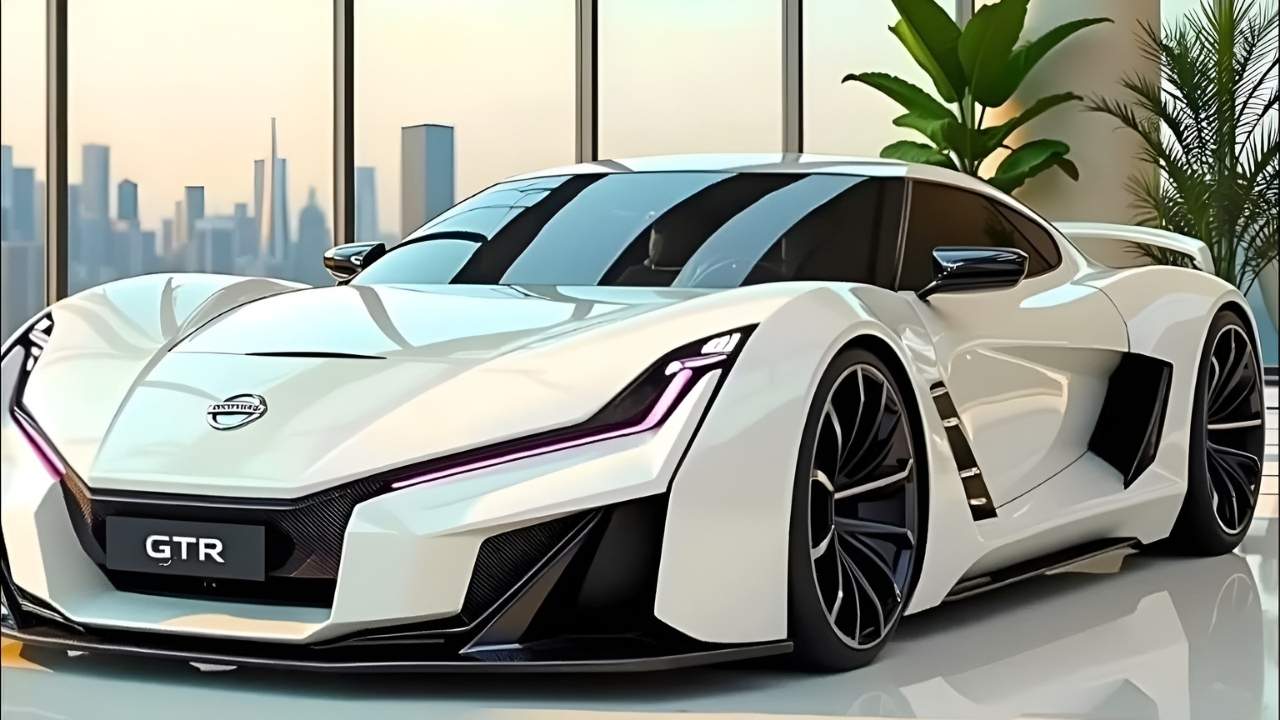
2026 Nissan GT-R: The Nissan GT R has always stood apart from ordinary performance cars. It is a machine that built its reputation through engineering rather than simply relying on an expensive badge. Over the years, the GT R became known for its strong performance, intelligent all wheel drive system, aggressive appearance, and technology focused approach to driving.

The name still carries enormous weight in the automotive world. However, discussing the 2026 Nissan GT R requires some clarification. The well known R35 generation reached the end of its production run, so a factory new 2026 R35 should not be presented as an ordinary current model. Instead, the 2026 discussion is closely connected with the GT R legacy and expectations surrounding a future generation.
That makes this an interesting time for Nissan enthusiasts. The R35 has completed an extraordinary journey, while the future of the GT R name remains one of the most exciting questions in the performance car world.

A Design That Became Instantly Recognizable
The GT R has never needed an extravagant design to make an impression. Its wide body, low roof, muscular proportions, large rear spoiler, and distinctive circular taillights give it a personality that is difficult to mistake for another vehicle.
The R35 design has aged remarkably well. While many performance cars can quickly begin to look dated, the GT R has retained a sense of purpose. Its body appears shaped around performance rather than fashion.

The broad front end gives the car a serious expression, while the side profile emphasizes its low and planted stance. At the rear, the famous four round lights provide a direct visual connection with the GT R family.
It is a design that communicates performance before the engine is even started.

The Heart of the GT R
One of the biggest reasons for the GT R’s reputation is its engine. The R35 was powered by a 3.8 liter twin turbocharged V6, an engine that became closely associated with Nissan’s modern performance engineering.
What made the powertrain special was not simply the output. Nissan developed the engine as part of a complete performance package. The engine, transmission, all wheel drive system, suspension, brakes, and electronic controls were designed to work together.
That approach allowed the GT R to make impressive use of its power.
Instead of creating a car that was only exciting in a straight line, Nissan built a machine intended to remain effective when acceleration, braking, and cornering were all involved.
Performance With Purpose
Performance numbers can tell only part of a car’s story.
The GT R became famous because it could deliver serious acceleration while remaining remarkably composed. Its sophisticated drivetrain helped transfer power to the road, giving the driver confidence when accelerating hard.
The dual clutch transmission was another important part of the experience. Rapid gear changes allowed the engine to stay within its effective power range while creating a continuous feeling of acceleration.
The car’s chassis was equally important. Strong brakes, carefully developed suspension components, and advanced electronic systems helped the GT R remain stable when driven aggressively.
This combination gave the car a distinctive character. It could be extremely quick without becoming completely unpredictable.
Technology Was Always a Major Strength
The GT R was never intended to be a simple mechanical sports car.
From the beginning, technology played a central role in its personality. Electronic systems monitor the vehicle and help manage the relationship between the engine, transmission, drivetrain, and chassis.
The all wheel drive system is particularly important. Instead of depending entirely on the rear wheels to handle the engine’s power, the system can use available traction to help the car accelerate effectively.
This technology helped create the GT R’s reputation as a performance car that could deliver extraordinary speed while remaining relatively approachable to experienced drivers.
It also helped distinguish the GT R from traditional sports cars that relied more heavily on mechanical simplicity.
A Supercar You Could Actually Drive
The GT R has always occupied an interesting position between a sports car and a supercar.
Its performance can be intimidatingly quick, but the overall vehicle was designed with everyday usability in mind. The cabin provides useful space, the driving position is familiar, and the car can be used outside a racetrack.
That versatility is a major reason the GT R became so popular.
An owner does not necessarily need to reserve the car for special occasions. It can be driven through a city, taken on a highway trip, or enjoyed on a winding road.
Few performance cars manage to combine that level of usability with such serious capability.
An Interior Built Around the Driver
Inside the GT R, the focus remains on performance.
The driving position puts the driver at the center of the experience, while the controls and displays provide information about the car’s behavior. Later versions received improvements in materials, equipment, technology, and overall refinement.
The cabin does not try to imitate an ultra luxury vehicle. Instead, it maintains the atmosphere of a high performance machine.
That balance suits the GT R.
The car is supposed to feel special when the driver gets behind the wheel, but it does not need excessive decoration to create that feeling.
The Meaning of Godzilla
The nickname Godzilla became one of the most recognizable descriptions associated with the GT R.
It reflected the car’s ability to challenge much more expensive performance vehicles. The GT R demonstrated that a Japanese manufacturer could produce a machine capable of competing with established European performance brands.
This reputation grew through magazines, television programs, racing games, motorsport, and the tuning community.
For many younger enthusiasts, the GT R was first discovered through a video game rather than a dealership. That helped give the car an unusual cultural reach.
The GT R became more than a Nissan model. It became a symbol of Japanese performance engineering.
The End of the R35 Era
The biggest story surrounding the GT R in 2026 is the conclusion of the R35 generation.
After years of production and continuous development, Nissan ended production of the R35. This means the familiar GT R should now be viewed as a completed chapter rather than a conventional 2026 production model.
That distinction matters for buyers.
Someone searching for a new 2026 GT R may find references to the model online, but those references do not necessarily mean that Nissan is producing a standard 2026 R35.
Instead, the final R35 cars represent the culmination of an important period in Nissan’s performance history.
What the Future Could Bring
The biggest question now is what Nissan will do with the GT R name.
A future generation would face a difficult challenge. The R35 created enormous expectations, and enthusiasts will expect the next car to offer more than impressive acceleration.
It will need character, advanced engineering, strong handling, and the kind of emotional connection that made the previous generation so popular.
Modern automotive technology could also change the formula considerably.
Hybrid systems, electric motors, advanced battery technology, lightweight materials, artificial intelligence based vehicle systems, and sophisticated aerodynamic control could all influence the next generation of high performance cars.
The challenge will be using those technologies without losing the personality that made the GT R special.
Could Electrification Change the GT R?
Nissan has already demonstrated interest in exploring electric technology with its R32 EV project. The project involved converting an R32 GT R into an electric vehicle as an engineering exercise.
That does not mean the project is a confirmed preview of a future production GT R. It does, however, demonstrate that Nissan engineers are interested in exploring how electric power could interact with the GT R heritage.
A future GT R could potentially use a hybrid system to combine instant electric torque with the character of a combustion engine.
Another possibility would be a fully electric performance car focused on acceleration, handling, advanced torque control, and driver engagement.
For now, exact specifications should not be assumed until Nissan officially announces a new production model.
Why the GT R Still Matters
The GT R remains important because it changed the way many people viewed Japanese performance cars.
It showed that a performance vehicle did not need to follow the traditional supercar formula to become genuinely exciting.
Instead of focusing exclusively on exotic materials or enormous prices, Nissan emphasized engineering and technology.
That philosophy produced a car that could compete with machines from far more expensive manufacturers while remaining relatively practical.
The result was a vehicle that attracted everyone from casual enthusiasts to serious performance drivers.
The GT R Legacy Is Far From Ordinary
The story of the Nissan GT R cannot be reduced to horsepower or acceleration figures.
Its real achievement was creating an identity that survived for years.
The R35 became recognizable around the world, influenced an entire generation of enthusiasts, and helped establish Nissan as one of the major names in modern performance motoring.
Although the R35 production era has ended, the GT R name still carries enormous expectations.
The future remains unknown, but that uncertainty makes the next chapter even more interesting. Whether Nissan eventually chooses hybrid power, electric technology, or another approach entirely, a future GT R will have to respect the qualities that made its predecessor famous.
The GT R was never simply about being fast.
It was about proving what clever engineering could accomplish.
That is the legacy Nissan carries forward, and it is exactly why enthusiasts around the world are still waiting to see what comes next.